The greenhouse effect, explained way too simply
The one-sentence version
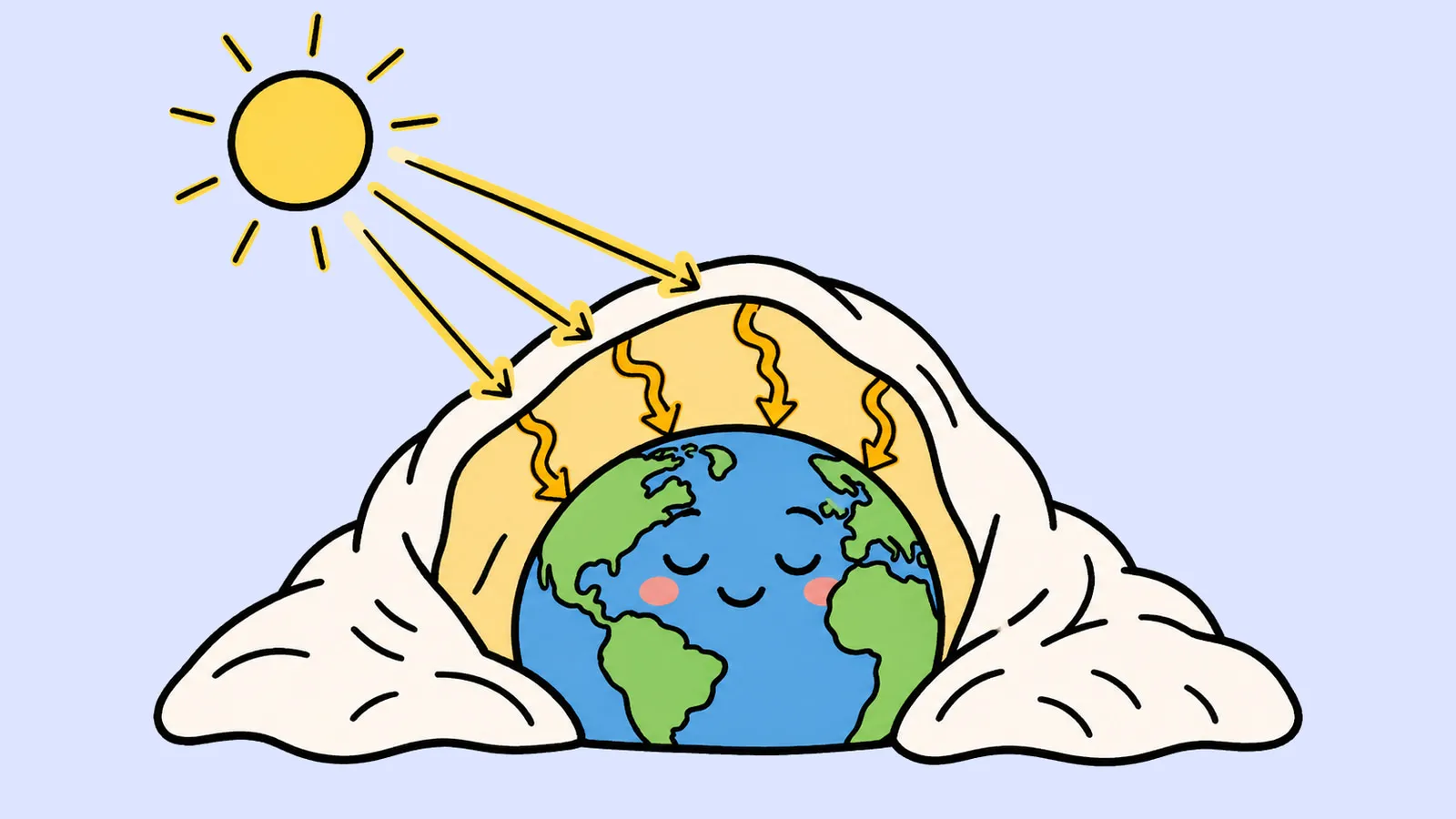
Some gases act like a blanket around the Earth: sunlight gets in easily, but the heat finds it harder to get back out.
Video coming soon
The slightly longer version
Light in, heat out
Sunlight travels through the air and warms the ground. The warm ground then gives that energy back off as heat, a kind of light you can’t see. If all of it escaped straight back to space, the Earth would average around −18 °C. Frozen, basically.
The blanket
A few gases in the air, mainly carbon dioxide, water vapour and methane, let sunlight through but catch some of that outgoing heat and send it back down. Like a blanket: it doesn’t make heat, it just slows down how quickly you lose it. Thanks to it, the Earth averages about 15 °C instead. The greenhouse effect is the reason we’re here at all.
A thicker blanket
Burning coal, oil and gas puts carbon dioxide into the air that was buried underground for millions of years. More of it makes the blanket thicker. Heat leaves more slowly than it arrives, so the planet warms until things balance out again at a higher temperature.
Why a few degrees matters
A degree or two sounds like a mild day. But it’s an average over the whole planet, all year round. Spread out, it means more heatwaves, rising seas as ice melts and water expands, and weather patterns that farmers and cities were built around shifting under them.